Pollution in Milton Creek “off the scale” What can we do to help?
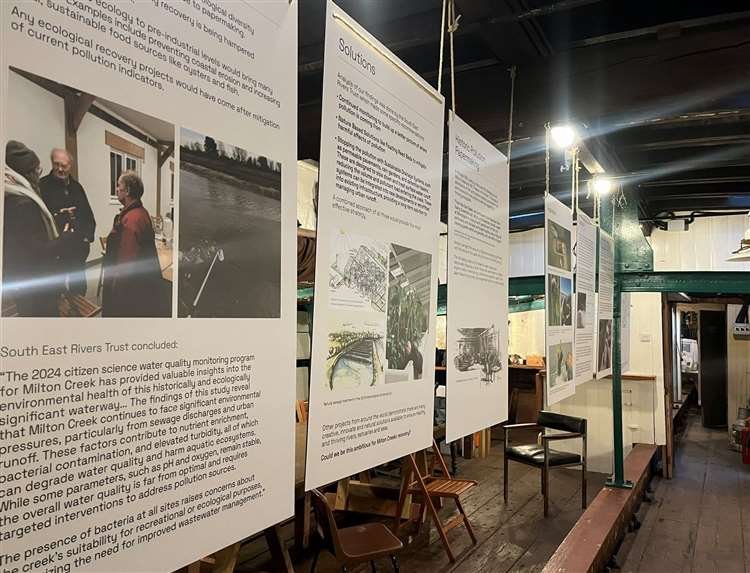
On board Raybel right now is the new exhibition 'What's in the Creek?' about our year-long Citizen Science project that charted the water quality of Milton Creek.
Like so many other rivers and waterways across the country the findings are heartbreaking. Bacterial levels are so high that it's way beyond swimming levels or recreational levels - even to the point of being dangerous for anyone to be in the water in a small craft. But it's the impact on natural ecology that worries us most.
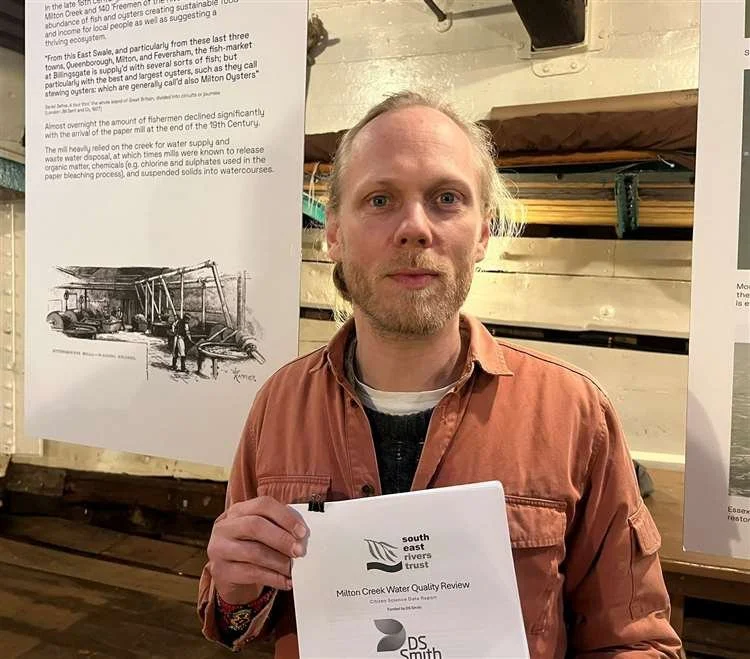
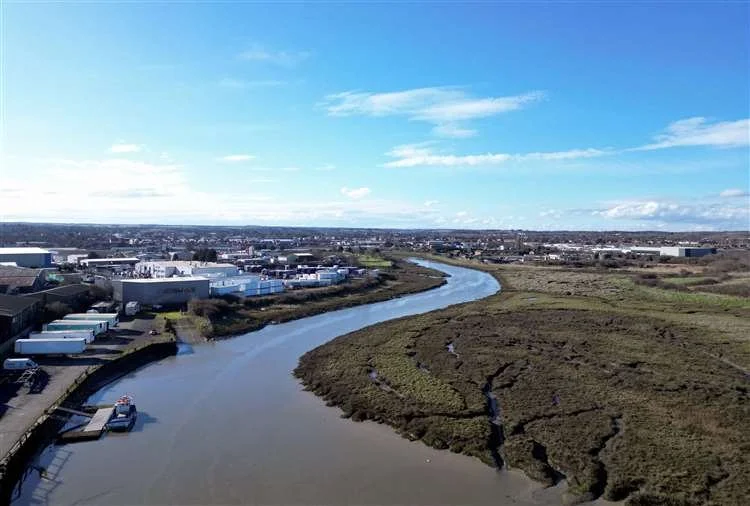
While historic pollution from the paper mills in Sittingbourne and Kemsley are still remembered locally, the research was funded by current owners of the Kemsley mill - DS Smith. We tested water quality at three different spots on the Creek – at Lloyd's Wharf, outside Southern Water's sewage treatment works half-way down the creek, and underneath Swale Bridge. Myself and a team of volunteers collected samples from the Creek once a month between January 2023 and January 2024.
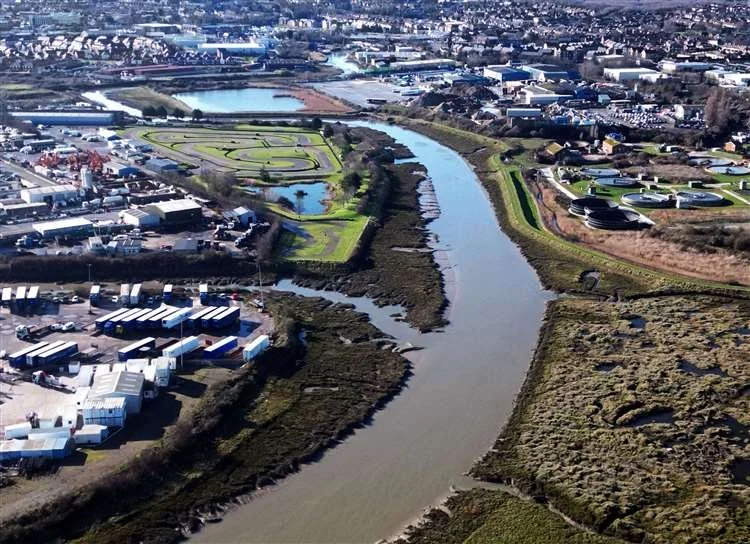
The highest levels of pollution were found at the sewage treatment works, where its outflow drain goes straight into the water - and where we found huge spikes of E. Coli levels beyond anything sensible.
During heavy rainfall or if the sewage treatment works are backed up, it is leaking treated, partially treated or untreated sewage into the Creek. Bacteria levels here were consistently higher than our equipment could measure – 10,000 colony-forming units (cfu) of E. coli per 100ml of water.
The government says micro-organisms like E. coli increase the risk of stomach bugs and could cause severe illness. Last year, there were more than 2,120 hours of sewage discharge into the Creek on 142 different occasions. E. Coli can also harm natural ecosystems and the results showed there were other key indicators that would raise concerns, like eutrophication.
The findings were compiled into a published report by the South East Rivers Trust, and we've been pleased how the work has been picked up in a big way by local press.
But what can we do about it?
Ultimately, it's up to the water companies to re-invest and divert money from the shareholder and director payouts they are rightly being hauled up about in the national media.
But there are things we can start to do as a community - and that will put extra pressure on them.
We're now looking for funding to do a phase two project, which will progress some ideas that will help. We've been inspired by natural solutions happening around the world. If they can do it in cities in India, why can't we?
One starting point is we don't currently understand where all the surface water from rain goes. In theory it should be separate from the sewage system. But many drains and gutterings from houses and businesses lead straight in to the sewers, and so overload it. This problem is compounded by the vast amount of hard surfaces around the Eurolink, retail parks and industrial sites which capture more rain, as they are impermeable, and so it can't soak into the ground. One simple solution is to divert any rainwater somewhere else, and something so simple could make a huge difference..... by diverting some of the rainwater out of the system with techniques like 'rain-scaping' we can provide more green space while helping reduce the burden on water treatment.
Other suggestions include nature-based solutions to clean up the pollution that already exists - floating reed beds would filter creek water and buffer strips would filter surface water before heading into drains, reducing the contamination of things like oil from trucks and cars. There is oyster bed restoration planned close to the Isle of Sheppy and one oyster can clean 140 litres of water per day. Milton Creek was once famous for its oysters and there are references to Milton Oysters in Daniel Defoe's A Tour Thro' the Whole Island of Great Britain.
Eventually, we'd also love to see seagrass meadows return to the Swale – which can provide habitat for seahorses! These meadows can help sequester carbon, mitigate flooding as well as wave and coastal erosion.
Combining all the solutions will increase efficacy - reducing the really high levels of pollution going into the creek will help the oysters and seagrass survive, therefore ensuring they can provide filtering and other incredible ecosystem functions.
There are lots of creative solutions to help the creek flourish again. With a small amount of funding and some more volunteers we can make it happen. We are planning litter picks and fish surveys, so get in touch if you'd like to help. We'd also love to hear from businesses that would like to get involved, especially those close to the creek - please email chris@raybelcharters.com